
If you spend your days glued to a workspace or running around managing a packed schedule, there is a good chance you are carrying a heavy amount of tension in your shoulders right now. Most of us treat tight muscles, a stiff neck, or a dull lower backache as just an annoying baseline of daily life. We tell ourselves we will stretch later, or maybe we book a relaxing spa trip once or twice a year to unwind.
But when you are dealing with persistent physical discomfort, a standard pampering massage usually isn’t enough. That is where Registered Massage Therapy (RMT) comes into play. It goes far beyond a temporary luxury treatment designed to help you drift off to sleep for an hour; it is a clinical healthcare discipline focused on getting your body to function properly again.
Shifting Focus From Relaxation to Recovery
The real difference between a general spa visit and an RMT session comes down to the underlying approach. An RMT is a licensed professional who has spent thousands of hours studying anatomy, physiology, and the intricate ways our muscular and nervous systems interact.
When you sit down with an RMT, they don’t just start rubbing wherever you point. They treat your movement patterns like a puzzle. They look at your posture, ask about your daily habits, and test your range of motion to figure out exactly why a certain spot keeps locking up. Instead of just soothing the symptoms, they look for the structural root cause of the strain.
The Long-Term Impact on Your Body
Because this approach relies on physical science and clinical assessment, the benefits stick around long after you get up from the table.
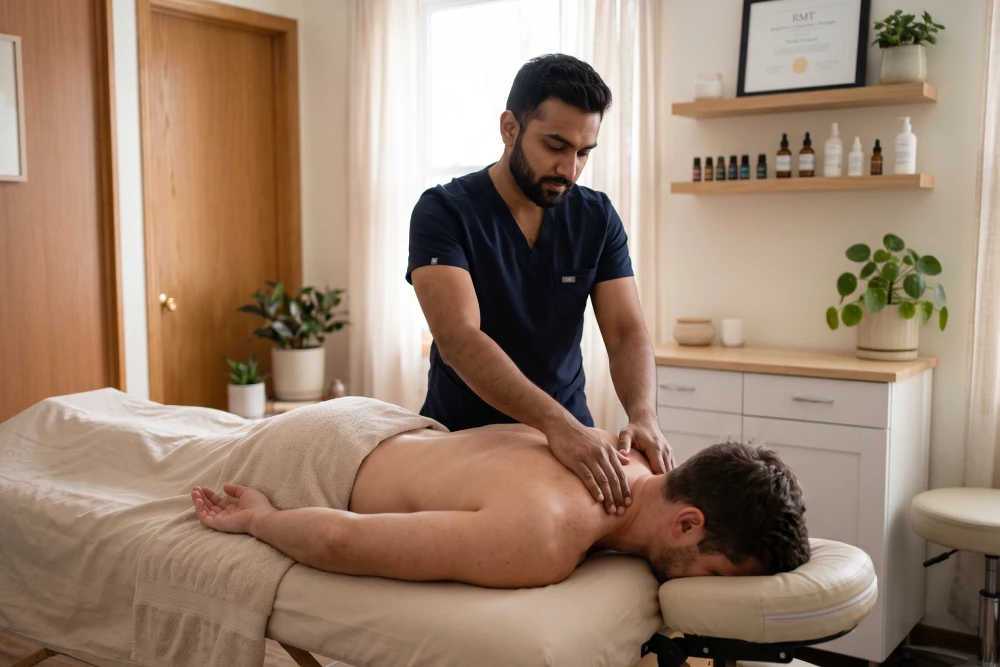
Think about what happens when you sit at a computer or drive for hours at a time. Your muscles shorten, tighten, and restrict local circulation, leaving you feeling constantly stiff. A therapist uses targeted, deeper pressure to break up those stubborn muscle knots, or trigger points. This direct work brings fresh blood flow back to the tissue, allowing the muscle fibers to finally release and relax.
Once that constant tension is gone, your flexibility naturally improves. Tight muscles constantly pull on your joints, which limits how freely you can move and often forces you to alter your posture—leading to secondary aches elsewhere. Restoring that muscle length makes simple daily movements feel smooth and completely natural again.
It is also highly practical if you are trying to bounce back from a minor injury, a pulled muscle, or repetitive strain issues like carpal tunnel. By carefully working the surrounding tissues, a therapist helps keep the area mobile and manages the formation of rigid scar tissue, ensuring that you heal flexibly rather than rigidly.
Beyond the physical mechanics, there is a massive mental benefit. Physical pain and mental stress are deeply intertwined. When you are overwhelmed, your nervous system stays in a constant state of high alert, causing your muscles to tighten up defensively. The focused work of a professional helps shift your body out of that “fight or flight” mode, dropping your physical defenses and making it much easier to get a peaceful night’s rest.
What an Actual Session Looks Like
Walking into an RMT clinic feels a bit different than walking into a dim, heavily scented day spa. Because it is an integrated part of healthcare, your first visit starts with a thorough assessment. You will talk through your health history, your daily routine, and any specific areas that are limitng your movement.
The treatment itself is fully customized to your specific needs. If you have an old injury, the session might focus entirely on restoring one specific joint or muscle group using specialized deep tissue techniques. If you are dealing with systemic burnout, the pressure will be adapted to soothe your nervous system.
The best part is that the care doesn’t end when you leave the room. A major component of an RMT’s job is giving you the tools to maintain those improvements at home. They will usually show you a couple of quick stretches to do at your desk or give you practical advice on how to adjust your chair or posture so you don’t end up right back where you started.
A Proactive Approach to Daily Life
You don’t have to wait until your back completely locks up or your neck is too stiff to turn before you take care of yourself. Making massage therapy a regular habit is a smart, preventative way to look after your physical health. By addressing minor stiffness and daily stress before they turn into major structural problems, you can keep your body moving comfortably and enjoy a much better quality of life.