

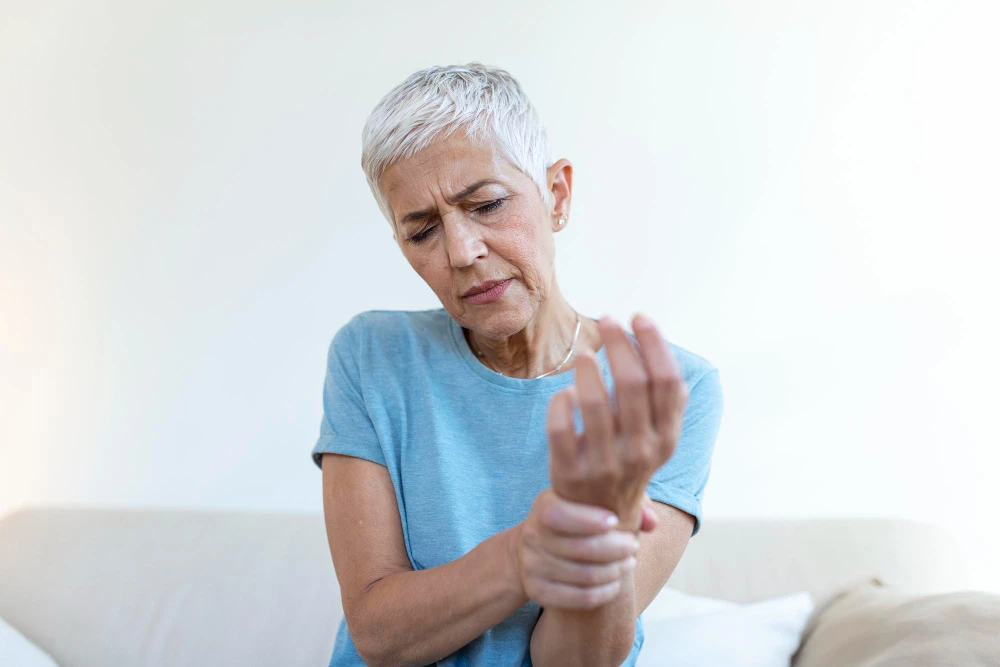
You know that moment when you’re halfway up the stairs, and your knee sends a sharp, unmistakable reminder that it’s there? Or when you wake up and your hands feel thick and clumsy, like you’re wearing invisible gloves?
For years, I brushed it off. I told myself it was from that old sports injury, from sleeping wrong, from anything but what it actually was. It wasn’t until I watched my mom struggle to turn her car key that I finally understood. She looked at her hand, frustrated, and said quietly, “It’s the arthritis.” That word hung in the air. It sounded so final. But what I’ve learned since is that it’s not an ending—it’s a redirect.
Let’s talk about what that word really means, without the scary medical jargon.
Think of your joints—your knees, hips, knuckles—as the most beautiful, functional pieces of engineering. They’re designed to glide, pivot, and bear weight, all thanks to a layer of smooth, shock-absorbing cartilage. Arthritis, in all its forms, is simply what happens when that smooth system hits a snag. The cartilage can wear down. The lining can get inflamed. Sometimes, the body’s own defense system gets confused and joins the fray. The result is the pain, stiffness, and swelling so many of us know.
But here’s the part they don’t always tell you in the waiting room: arthritis is a category, not a single villain. Knowing which type you’re dealing with changes everything.
There’s Osteoarthritis, the kind most of us will meet eventually. It’s the slow, steady wear and tear of a lifetime of use. It’s like the padding in your favorite chair getting a little flatter each year. It shows up in the knees after decades of stairs, in the hands after years of work and play.
Then there’s Rheumatoid Arthritis (RA), which is a different story altogether. This isn’t about wear. It’s an autoimmune condition, where the body’s immune system mistakenly attacks the joints’ lining. The stiffness here is profound, often lasting for hours in the morning, and it comes with a deep fatigue that rest doesn’t fix.
You might also hear about Gout (sudden, fiery attacks often in the big toe) or Psoriatic Arthritis (linked to psoriasis). Each has its own fingerprint.
So, how do you know if your aches are part of this story? The signs tend to be persistent and specific:
- A deep, bony ache inside the joint itself.
- Morning stiffness that makes you feel like you need to “warm up” to your own body.
- Swelling or warmth that makes a knuckle or knee look different.
- A feeling that your range of motion is quietly shrinking.
If this is resonating, please hear this: learning you have arthritis is about gathering information, not surrendering. It’s the first step in learning a new language—the language of your own body.
Management looks less like a strict medical protocol and more like curating a personalized toolbox. For my mom, and for so many others, the most effective tools were surprisingly simple.
Movement, But Kinder: We’re told to exercise, but “no pain, no gain” is the worst possible advice here. It became about gentle motion: a daily walk to keep the gears oiled, a swim to build strength without the pounding, some careful stretching. Motion is lotion for stiff joints.
The Power of Pace: This was her hardest lesson. She’s a doer. Arthritis taught her the art of the interval—working for forty-five minutes, then resting for fifteen. It’s about working with your energy, not against it.
Food as a Gentle Influence: She noticed that on days she ate more processed food and sugar, her joints grumbled more. She didn’t go on a drastic diet, but she gradually leaned into more whole foods: leafy greens, berries, salmon. She calls it “eating for calm” instead of eating for a cure.
Building Your Crew: You don’t navigate this alone. A good physical therapist is worth their weight in gold, teaching you exercises that protect your joints. An occupational therapist can change your life with simple gadget recommendations (the electric jar opener was a revelation). And a trusted doctor helps you navigate the world of medications, which can range from simple anti-inflammatories to advanced drugs that can actually slow the progression of diseases like RA.
Some days, the tool is a warm bath. Other days, it’s a well-timed ice pack. It’s about responding, not just reacting.
Living with this is a journey of nuanced listening. It asks you to be a compassionate friend to yourself. Some days are fluid and easy; others feel rigid and difficult. The goal shifts from “fixing” yourself to supporting yourself—so you can keep living a life that feels rich and full, even if the map has been redrawn.
It’s my mom choosing a scenic drive over a strenuous hike and finding a new kind of joy in it. It’s her using a beautifully designed ergonomic knife in the kitchen and realizing it’s not a compromise, but an upgrade. It’s the quiet dignity in adapting.
If you see your own story in these words, consider it a nudge to start a conversation—with your doctor, yes, but first, with yourself. Pay attention. Keep notes. Advocate. Your body is speaking; arthritis is just one of its accents. And learning to listen is the most powerful treatment of all.