

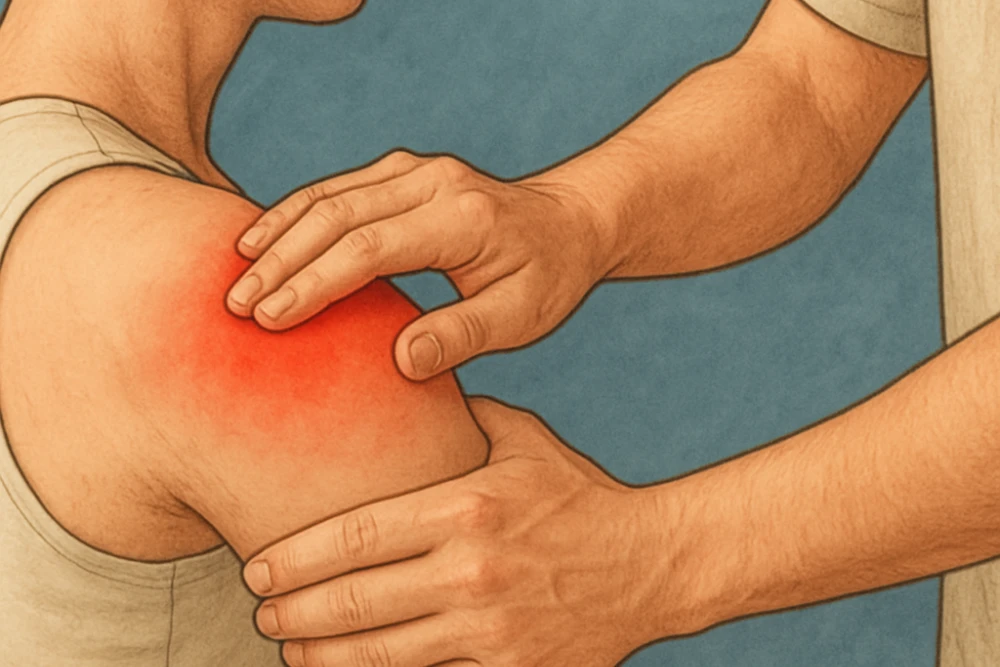
You know that feeling when you go to scratch an itch between your shoulder blades and suddenly realize… you can’t? Or when reaching for your seatbelt becomes an awkward contortion act? If this sounds familiar, you might be dealing with frozen shoulder – that mysterious condition that turns simple movements into frustrating challenges.
The Slow Creep of Shoulder Stiffness
Frozen shoulder doesn’t happen overnight. It’s more like that one houseguest who overstays their welcome:
- The “Hmm, That’s Odd” Phase
You notice some discomfort when reaching behind you or sleeping on that side. Maybe you blame it on “sleeping wrong.” - The “Okay, This Is Annoying” Phase
Putting on coats becomes a strategic operation. Washing your hair feels like a workout. - The “Seriously?!” Phase
Basic tasks like fastening a bra or grabbing something from the back seat require creative solutions.
The medical term is adhesive capsulitis, but let’s be real – it feels more like your shoulder decided to glue itself in place.
Who Gets Targeted by This Shoulder Rebellion?
While frozen shoulder can happen to anyone, it seems to have favorites:
- The 40-60 Club (Because midlife wasn’t challenging enough)
- People with Diabetes (Up to 5 times more likely – thanks for nothing, pancreas)
- Recent Arm Immobilizers (After injuries or surgeries)
- Women (Because biology enjoys its little jokes)
Hands-On Help That Doesn’t Hurt (Much)
When muscles around your shoulder join the protest, massage therapy can be surprisingly effective by:
- Easing the Overworked Crew (Those compensating muscles need breaks too)
- Keeping the Blood Flowing (Stagnant areas heal slower)
- Maintaining What Mobility Remains (Every little bit counts)
The key is finding someone who understands frozen shoulder’s quirks – they’ll know how to help without making you want to punch them (with your good arm).
Stretches That Won’t Make You Swear
With frozen shoulder, stretching is like negotiating with a stubborn toddler – push too hard and everything falls apart. Try these:
The “I’m Just Leaning” Stretch
Place both hands on a counter and slowly walk your feet back, letting your torso drop between your arms. No forcing – let gravity do the work.
The “Helpful Towel” Trick
Drape a towel over your good shoulder, grab it with your affected hand behind your back, and gently pull upward. It’s like giving yourself a little assist.
The “Tabletop Slide”
Rest your hand on a table with a cloth underneath and slowly slide it forward. It’s physical therapy you can do while watching TV.
Remember – discomfort is normal, but pain is your body’s way of saying “That’s enough for today.”
When Tiny Needles Might Be the Answer
IMS (Intramuscular Stimulation) uses hair-thin needles to target specific trouble spots. Why it works:
- Resets muscles stuck in permanent tension mode
- Helps confused nerves stop sending constant pain signals
- Often provides relief when other methods stop working
It sounds scarier than it is – most people describe it as quick pinches followed by noticeable relief.
Your Personalized Comeback Plan
The winning formula usually includes:
- Professional Guidance (Because Dr. Google isn’t always right)
- Consistent Movement (Short, frequent sessions beat marathon efforts)
- Patience (This is a marathon, not a sprint)
- Smart Modifications (Learn new ways to do old tasks)
Heat before activity and ice after can help manage the discomfort rollercoaster.
When to Wave the White Flag and Get Help
Consider professional help if:
- Your shoulder wakes you up at night more than a newborn
- You’ve started dressing like a toddler (pullover shirts only)
- Basic hygiene is becoming an extreme sport
- Weeks pass with no improvement
Early intervention often means a shorter recovery time overall.
The Light at the End of the Tunnel
Here’s the good news – frozen shoulder does eventually give up. With the right approach, most people regain nearly all their normal movement. The key is staying consistent with treatment rather than waiting it out.
At 272 Physiotherapy & Massage Clinic, we specialize in creating realistic recovery plans for actual humans with real lives. Whether through hands-on therapy, practical exercises, or IMS, we focus on helping you get back to living without constantly negotiating with your shoulder.
If shoulder stiffness is making everyday life harder than it needs to be, it might be time to talk to someone who speaks “frozen shoulder.” With proper guidance, you can navigate through the freezing, frozen, and thawing phases more comfortably.
For more information on approaches that might help your specific situation, visit 272 Physiotherapy & Massage Clinic. Remember – movement, done right, is medicine, even when your shoulder feels like it’s permanently stuck on “no.”